

Wargaming USA · UI/UX Director
Team: Multidisciplinary UX team of designers, artists, animators, and engineers
Lead player experience strategy for World of Tanks Modern Armor, partnering with studio leadership to shape product direction and guide cross-functional teams in simplifying complex live-service systems into intuitive player experiences. My work focuses on improving information hierarchy, reducing cognitive load, creating scalable design systems, and modernizing workflows that help both players and development teams succeed.
Game mode Screen
The challenge: Players had no reliable way to identify which game mode they had entered after leaving this screen, leading to confusion and a fragmented player experience. The existing horizontal navigation also broke down as event offerings changed, creating inconsistent layouts that were difficult for players to learn and expensive for the team to maintain.
The solution: I led a redesign centered on a scalable vertical navigation system that accommodated any number of game modes while aligning with UX standards established across our sister titles. We introduced distinctive iconography, color systems, and animated visual treatments to give every mode an immediately recognizable identity, while partnering with Live Operations to make key screen elements data-driven. The result was a more intuitive player experience, a unified navigation system, and a flexible framework that reduced implementation effort while allowing new events and modes to be deployed with minimal engineering overhead.
Garage
The challenge: The garage had become increasingly complex as new features were added over time. Players lacked clear orientation, frequently entered menus unintentionally, struggled to discover active events, and encountered localization issues that caused interface elements to overlap. The experience was difficult to navigate for players and increasingly difficult for the team to evolve.
The solution: I led a redesign that strengthened game mode identity and established more consistent interaction patterns throughout the garage. Navigation controls were standardized across screens, iconography replaced lengthy labels to improve localization and visual clarity, and hold actions were introduced to reduce accidental inputs. We also added direct access to live events and new visual indicators that surfaced Elite-leveled tanks. To preserve familiarity for our existing player base, these improvements were introduced incrementally rather than through a disruptive redesign. The result was a clearer, more intuitive garage experience that reduced friction for players while creating a more scalable foundation for future updates.
HUD Proposal
Note: the “after” shown here is a proposal, not yet live in the game.
The challenge: Years of incremental updates had left the HUD crowded, inconsistent, and difficult to interpret in combat. Critical information competed for attention, core interactions such as ammo selection and base capture lacked clarity, and the interface had become increasingly difficult to evolve as new features were introduced.
The solution: I led a comprehensive HUD redesign focused on improving readability, reducing cognitive load, and creating a more flexible system for future development. We restructured the interface into modular regions that supported player customization, redesigned the ammo selector and reticle to surface critical information more effectively, and improved base capture visibility. Working closely with our Lead UX Designer, I developed interactive Figma prototypes to validate concepts, then partnered with our Senior Artist to create a reticle design tool that enabled rapid iteration and evaluation outside the game engine. The result was a clearer combat interface, faster design workflows, and a scalable foundation for future HUD enhancements.
Additional Screen Updates
A selection of interface improvements and product proposals developed in collaboration with the UX Design Lead, UX Engineering Lead, and the broader team, spanning player experience, Live Operations, and product evolution.
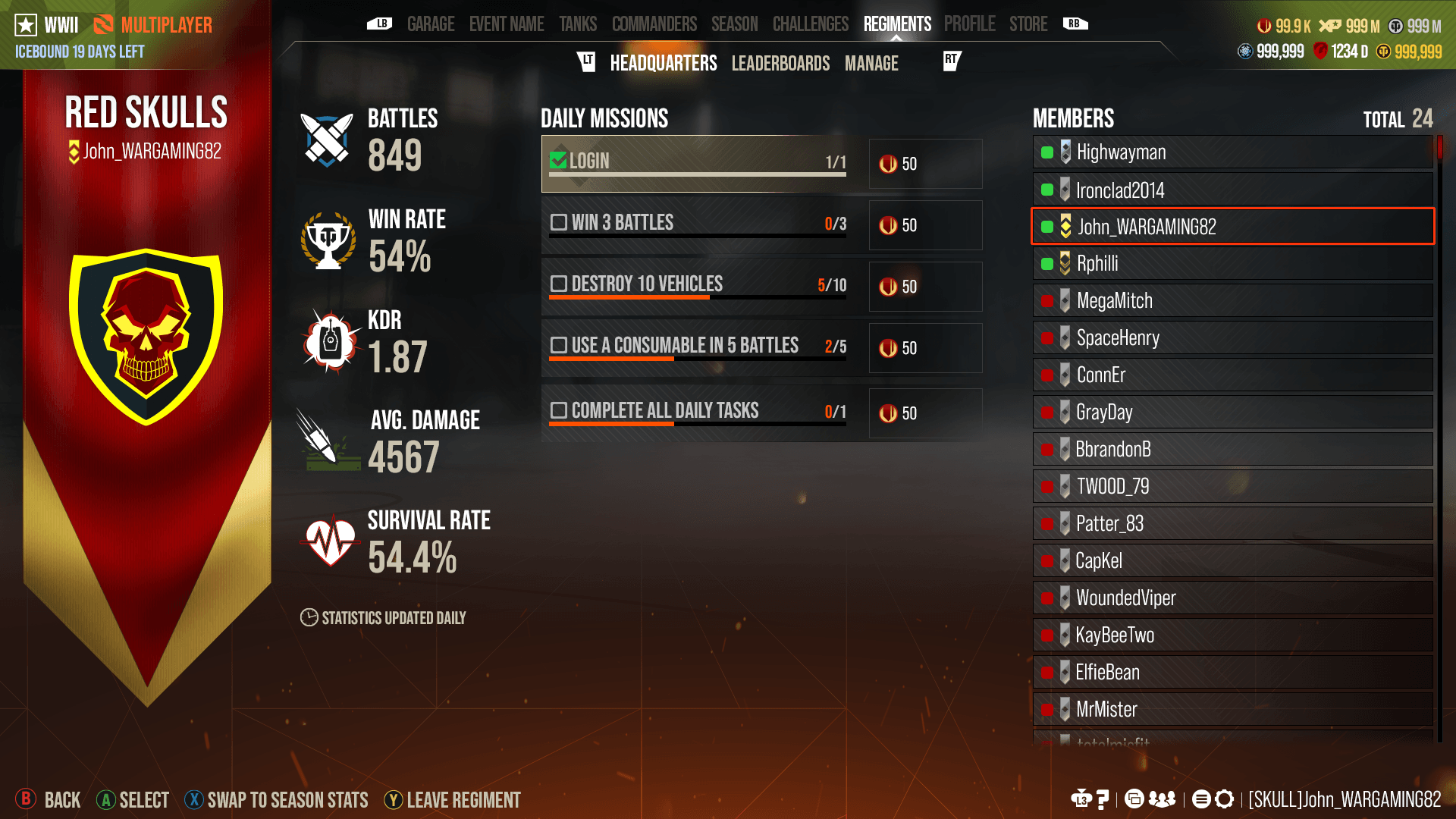
Regiments -Led the UX direction for a new social feature that introduced leaderboards, regiment management, customization, and cooperative challenges to strengthen long-term player engagement.
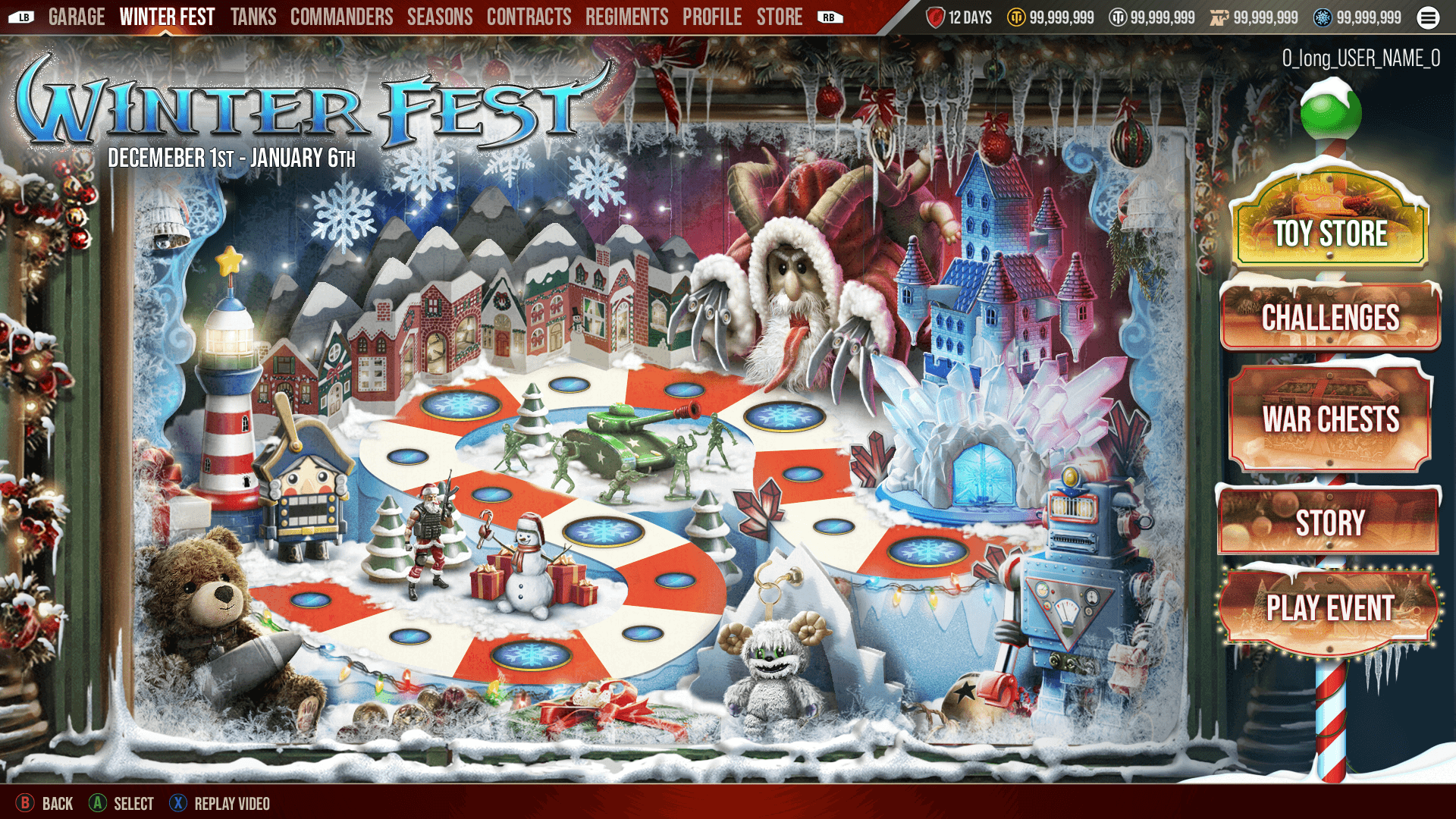
Event Container - Partnered with Game Design and Live Ops to create a modular, data-driven event framework that supports rapid deployment of challenges, rewards, and monetization content.
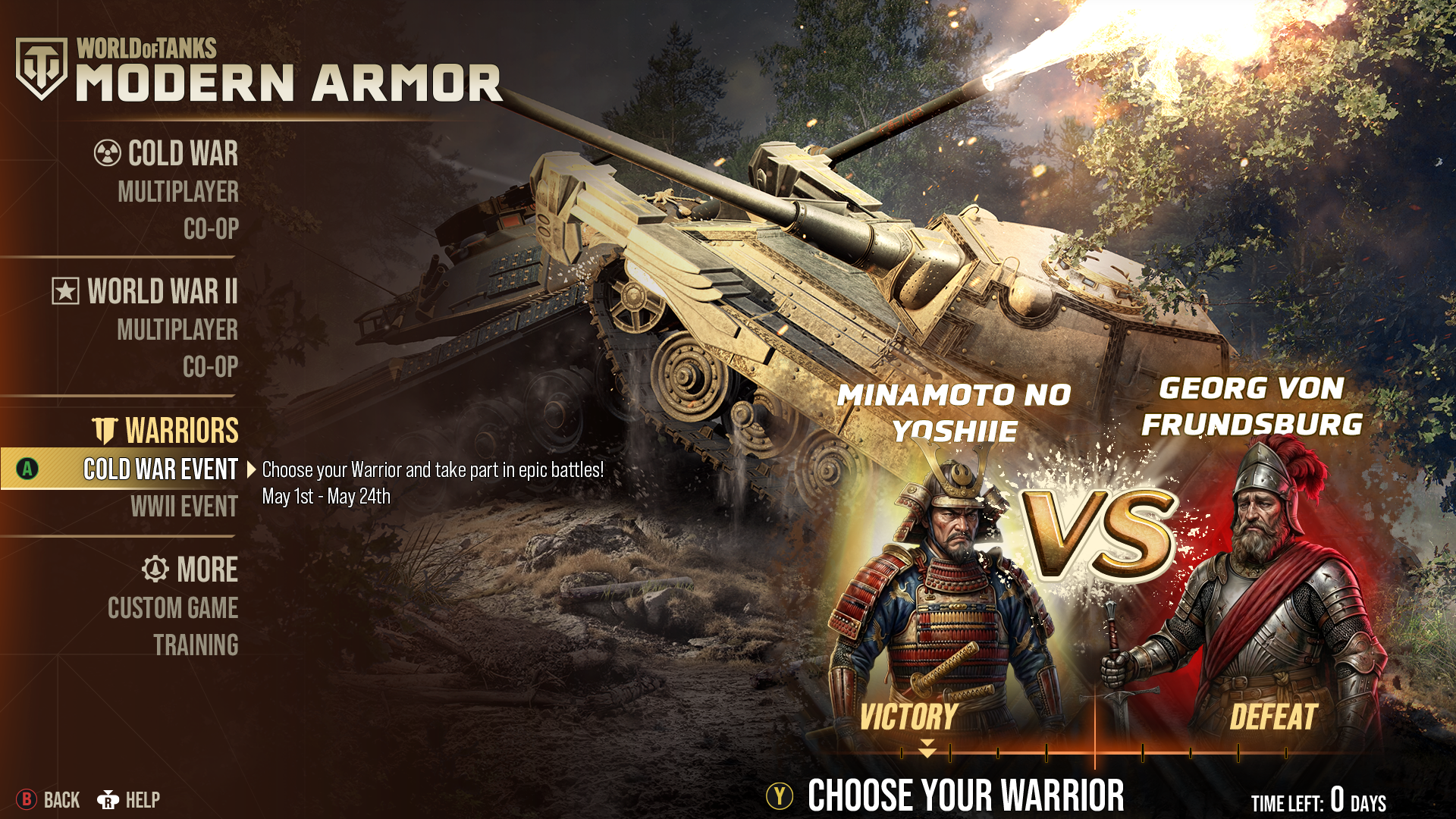
Community Challenge - Redesigned the experience to improve player participation while giving Live Ops greater flexibility through dynamic, data-driven event content.
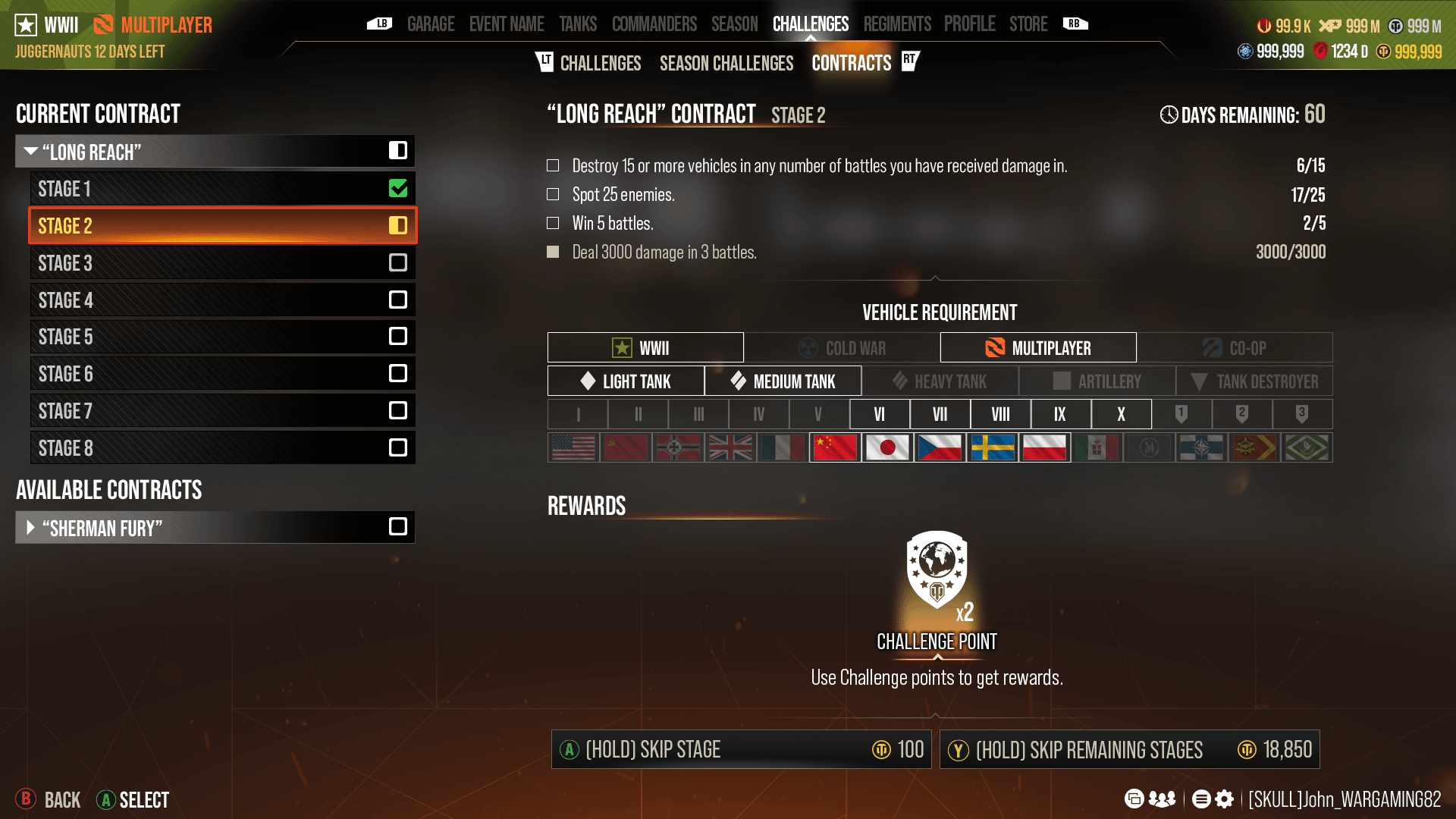
Contract Screen - Redesigned the contract experience with clearer navigation, stronger information hierarchy, and improved reward communication to simplify long-term progression.
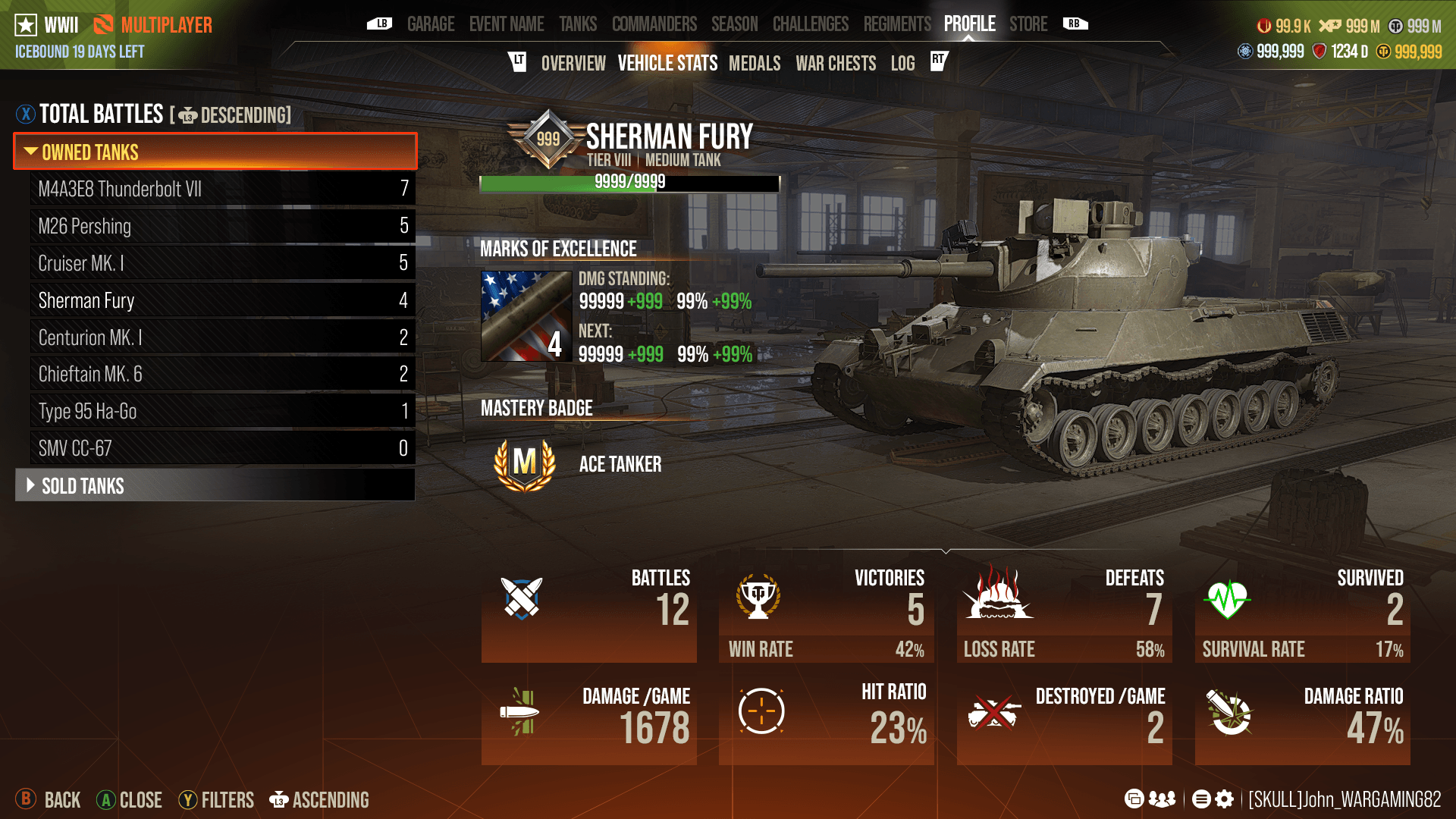
Tank Stats Screen - Reorganized navigation and filtering to improve discoverability while highlighting progression systems. Shifted key presentation into 3D to reduce ongoing art production and improve scalability.
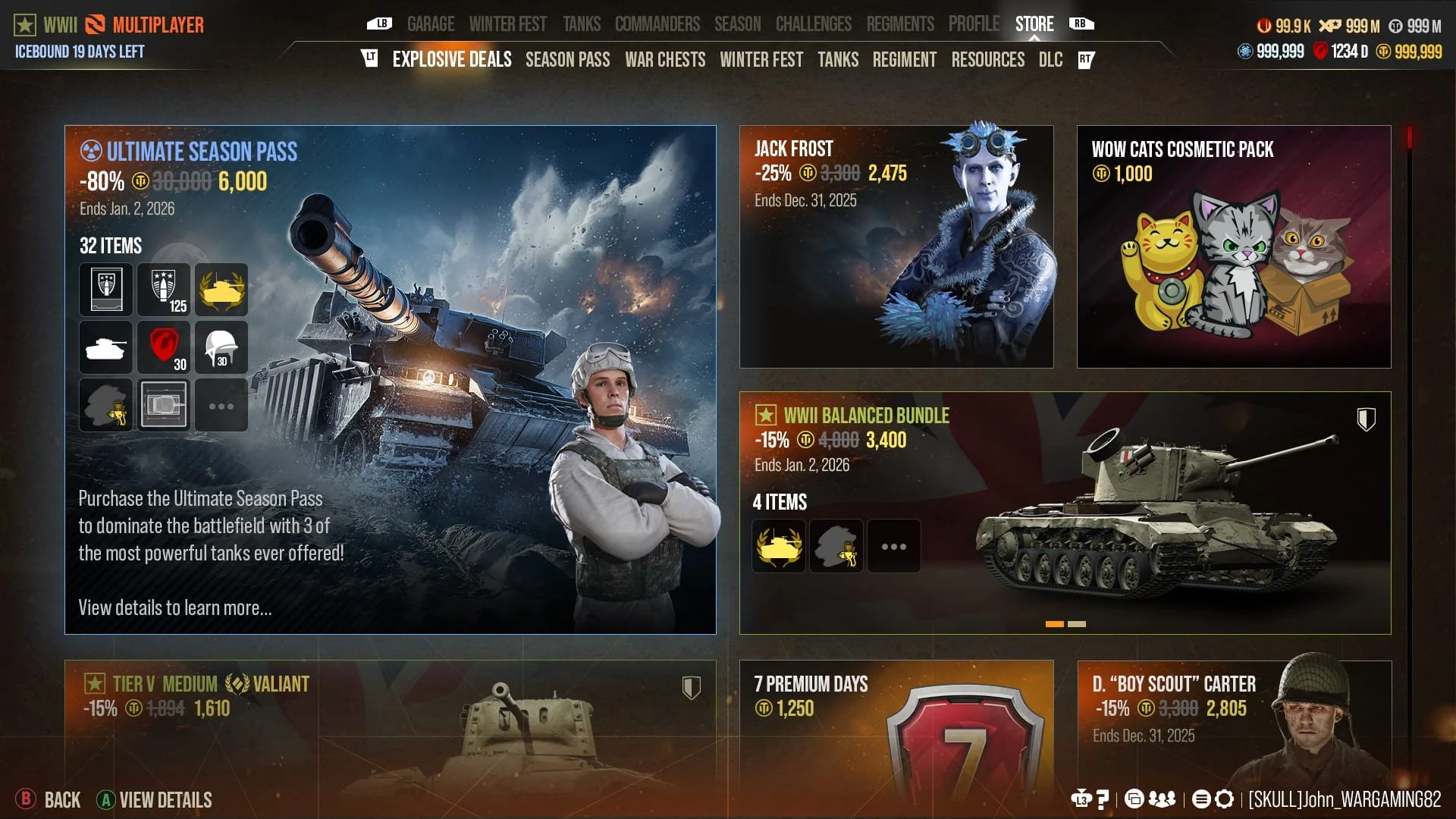
Store Proposal - Provided UX direction and creative feedback for a store redesign focused on improving navigation, content discoverability, and the overall purchasing experience.